Support Our Work

The Wrong Questions Project is led by survivors and surviving families. Your support directly funds the creation and presentation of exhibits that center survivor voice, refuse victim-blaming, and hold institutions accountable.

We are approved as a 501(c)(3) nonprofit organization by the IRS (EIN: 42-3405697). Your contributions are tax-deductible. We invite you to support this work and be part of the community that believes survivors deserve to be named, heard, and believed. Please consult your tax advisor regarding your own contribution.

PUT THE RECORD IN THE ROOM

Help Fund The Wrong Questions Project at Wellspring

October 10, 2026 | Malta, New York

GOAL: $10,000

Donate via PayPal

PayPal QR Code for donations

Scan the QR code above to donate to The Wrong Questions Project

On October 10, The Wrong Questions Project will bring its next full exhibit to Wellspring in Malta, New York.

We are raising $10,000 to fund the installation.

The Wrong Questions Project begins with questions we know too well:

"What were you wearing?"

"Why didn't she just leave?"

"Why didn't you just tell someone?"
These are not neutral questions.

They redirect scrutiny from the perpetrator to the person who was harmed. They relocate violence into a victim's clothing, choices, memory, fear, silence, delay, or attempts to survive. When the victim does not survive, the questions are redirected toward the family members left behind.

The exhibits ask us to look somewhere else.

At the perpetrator.

At the violence.

At the evidence.

At what the survivor actually said.

At what institutions knew.

At what they did.

And at what they failed to do.

Put the Record Beside the Disbelief

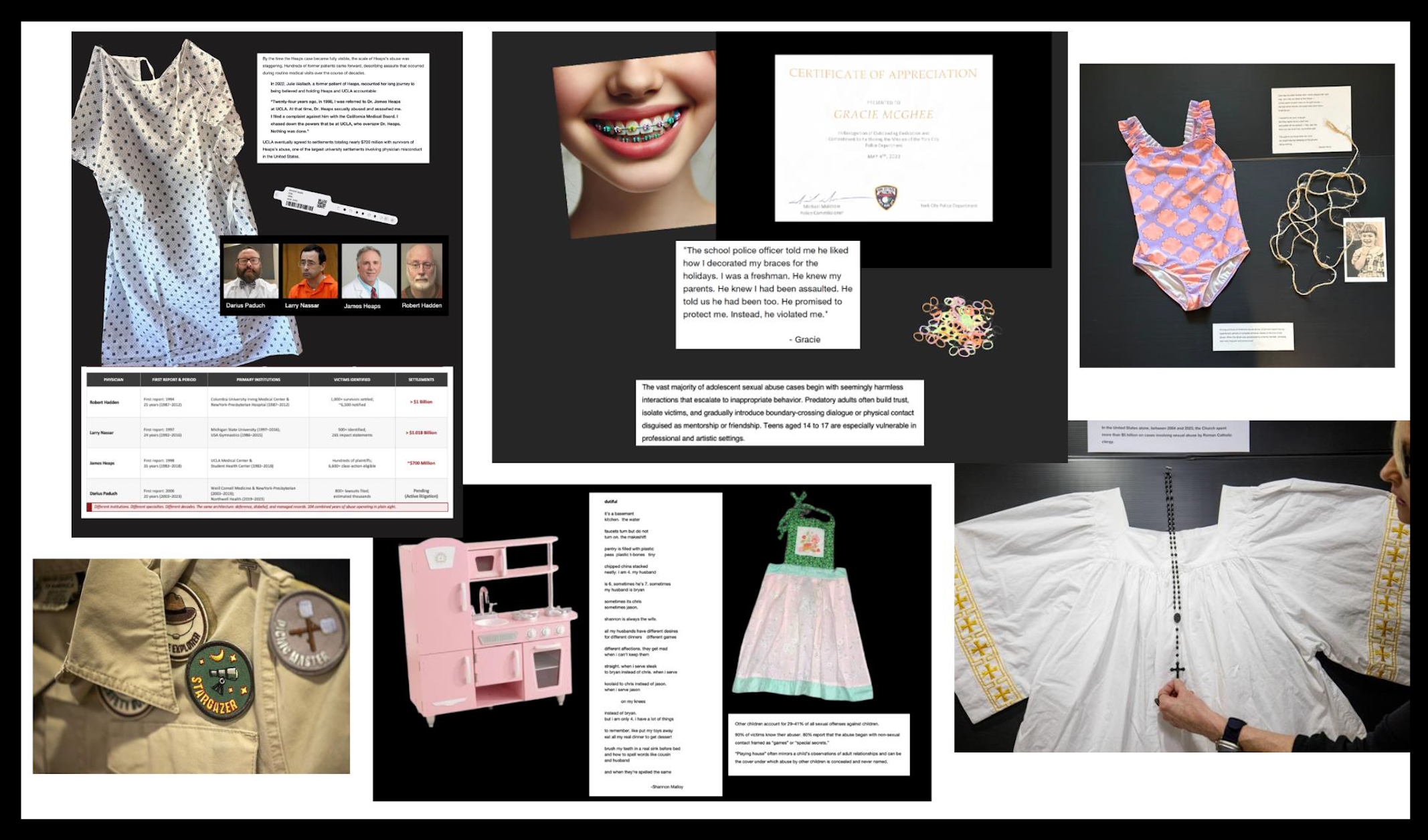
The Wrong Questions Project exhibits are not illustrations or artistic interpretations. They are documentation.

Clothing. Objects. Survivor testimony. Family witness. Case records. Police records. Statistics. Photographs. Audio. Video. Words that were spoken. Questions that were asked. Evidence that was ignored, minimized, misunderstood, or absorbed into institutional procedure.

We place these things together because the wrong questions change what people see. They make the victim the subject of inquiry. The exhibit changes the subject back.

Why Wellspring

On October 10, this work will enter a community space devoted to responding to domestic violence and sexual assault. That matters.

The purpose of bringing The Wrong Questions Project into communities is not simply to tell people that victim-blaming is wrong. It is to make the mechanisms of victim-blaming visible.

It is to show what disappears when we ask why she stayed instead of asking what made leaving dangerous. What disappears when we ask what she was wearing instead of asking why someone decided to assault her. What disappears when we ask why a child did not tell instead of asking how grooming works, why speaking can be dangerous, whether adults listened, and what happened when someone did tell.

The questions determine what we investigate. They determine whose behavior requires explanation. They determine who is believed. And they can determine what happens next.

What Your Contribution Makes Possible

Our goal is $10,000.

A $200 contribution funds the materials for one complete exhibit storyboard.

A $1,000 contribution helps fund transportation of the exhibit installation.

A $2,500 contribution underwrites one quarter of the full Wellspring campaign.

A $5,000 contribution funds half.

And gifts of every amount move us toward putting the complete exhibit into the room on October 10.

Why This Work Exists

The Wrong Questions Project is survivor-led, survivor-centred, and surviving-family-centred.

The people represented in these exhibits are not examples of an issue. They are people. They have names. They have histories. They have families. Some survived. Some did not. Some told immediately. Some told years later. Some left. Some could not leave. Some sought help from systems that protected them. Others sought help from systems that failed them.

The point is not that all of their experiences are the same. The point is that none of them should have been required to account for violence they did not cause.

Help Us Put the Record in the Room

On October 10, we want the complete exhibit standing at Wellspring. We need $10,000 to do it.

If you believe we have been asking victims, survivors, and surviving families the wrong questions, help us ask different ones. Help us make the evidence visible. Help us put the record in the room.

The Wrong Questions Project, Inc. is an IRS-recognized 501(c)(3) nonprofit organization. Contributions are tax-deductible to the extent permitted by law.

IRS EIN: 42-3405697

Contributions to this campaign support The Wrong Questions Project's October 10, 2026 Wellspring exhibit. The Wrong Questions Project is a separate nonprofit organization from Wellspring.

How Your Support Funds Our Work

Every dollar goes directly to creating and hosting exhibits, educational programming and materials that expose victim-blaming and center survivor testimony. Here's how different levels of support make our work possible:

$200

Exhibit Storyboard Materials

  • Funds materials for one complete exhibit storyboard
  • Includes documentation, printing, and display materials
  • Centers one survivor's testimony and evidence
  • Creates a permanent record refusing erasure
$1,000

Exhibit Transportation

  • Transports an exhibit installation to a host site
  • Brings survivor testimony to communities that need it
  • Enables institutions to confront their own patterns
  • Makes visible what has been normalized and absorbed
$10,000

Full Exhibit with Educational Presentation

  • Funds a complete exhibit installation
  • Includes educational presentation by survivors and surviving family members
  • Enables direct testimony and dialogue with communities
  • Transforms institutional understanding of victim-blaming

Donate via PayPal

PayPal QR Code for donations

Scan the QR code above to donate to The Wrong Questions Project

What's Included with Every Exhibit Installation

Survivor Testimony & Documentation

Each exhibit is not an illustration. It is documentation. The clothing, words, objects, statistics, case records, audio, video, testimony, and family witness are part of the argument. They are part of the evidence. Survivors' names, stories, and accounts are centered—refusing erasure and administrative absorption. Participants encounter specific people, specific cases, and specific institutional failures.

Free Companion E-Book

Each exhibit installation includes a companion e-book specifically developed for the local area. The e-book includes regional data, statistics, case information, and educational content relevant to the specific community. It is available for free download on Amazon during the exhibit, allowing participants to bring the learnings back to their organizations and share with colleagues.

Optional Educational Programming

Exhibits can be paired with educational programming designed to transform institutional understanding. Options include expert discussions, survivor-led presentations, institutional workshops on recognizing victim-blaming patterns, and trainings on building accountability systems. Programming is customized for each host site's needs and context.

The Goal

Through testimony, documentation, and shared learning, exhibits expose the architecture of disbelief. They make visible what has been normalized, minimized, laundered, and administratively absorbed. They refuse the grammar of impunity and center the voices, evidence, and accountability that survivors and surviving family members deserve.

Why This Work Matters

Refusing Erasure

Your support funds the creation of exhibits that refuse the administrative erasure of survivors. Each storyboard centers a specific person, a specific case, and a specific institutional failure. These are not generic stories. They are particular people whose names, testimony, and evidence deserve to be seen and remembered.

Centering Survivor Voice

The Wrong Questions Project is survivor-led, survivor-centred, and surviving-family-centred. Donations support the work of survivors and surviving family members who refuse to shrink their accounts or translate their testimony into the language that was built to discredit them. This is the work of reclamation.

Institutional Accountability

Your support enables institutions—universities, hospitals, law enforcement, courts, social service organizations—to confront the victim-blaming questions embedded in their systems. When the wrong questions become visible, institutions are forced to examine the procedures, credibility hierarchies, and institutional indifference that protect perpetrators and harm survivors.

Building a Movement

Justice is inseparable from voice. Your donation is an act of solidarity with survivors and surviving family members who refuse to carry the shame that was never ours to bear. Together, we are building a movement that refuses victim-blaming, centers survivor testimony, and demands institutional accountability.

501(c)(3) Status Approved

We are approved as a 501(c)(3) nonprofit organization by the IRS. Your contributions are fully tax-deductible. We invite you to join us in this work and honor survivors with your support.

IRS EIN: 42-3405697

If you would like to discuss supporting this work, have questions about how donations are used, or need information about your contribution for tax purposes, please reach out to us.

Documentary Field Notes Series

Our companion e-books bring the stories and evidence from each exhibit location directly to you. Available now on Amazon Kindle.

Browse Full Series on Amazon

Other Ways to Support

Share Our Work

Follow us on YouTube and Substack. Share our videos, documentaries, and educational content with your networks. Help us reach communities that need this work.

Host an Exhibit

If you represent an institution—a university, hospital, court, or community organization—interested in hosting an exhibit and educational presentation, we want to hear from you.

→ Inquire About Hosting

Contribute Your Story

If you are a survivor or surviving family member with a story to share, reach out to learn more.

→ Share Your Story